

Press Releases
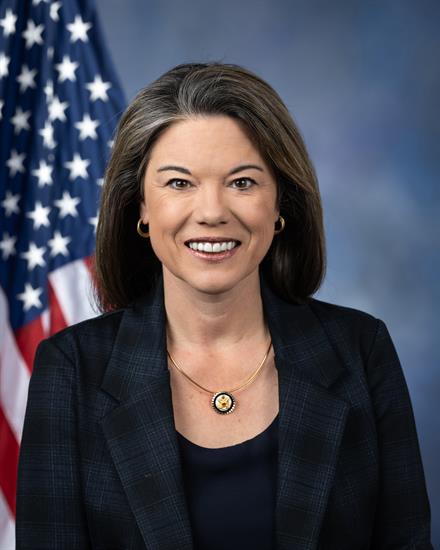
Ranking Member Angie Craig Opening Statement at Hearing with CFTC Chairman Selig
Washington,
April 16, 2026
|
Britton T. Burdick
Tags:
Full Committee
Today, House Agriculture Committee Ranking Member Angie Craig (MN-02) delivered the following opening statement at a full committee hearing titled “For the Purpose of Receiving Testimony from the Honorable Michael S. Selig, Chairman, U.S. Commodity Futures Trading Commission.” Watch the full hearing here. [As prepared for delivery.] Thank you, Mr. Chairman. And thank you, Chairman Selig, for being here today. I’m grateful for the chance to discuss the work of the Commodity Futures Trading Commission in the critical areas of consumer protection, market integrity and the stability of our financial system. For fifty years, the CFTC has been the cop on the beat for America’s derivatives markets – markets that touch everything from the price of groceries and gas to how our farmers manage risk out in the field. But today, CFTC’s responsibilities and markets have expanded and become more complex than ever in just the last few years. Digital assets and prediction markets have opened new horizons – and created new risks – and we cannot expect the agency to keep up if Congress doesn’t set the appropriate rules and regulations as well as give it the staffing, the funding and the tools it needs to do its job well. Let me start with something that should be uncontroversial: The CFTC needs to be fully staffed. We are asking a relatively small agency to oversee enormous, technologically sophisticated markets that operate at the speed of light, and in some quarters, 24 hours a day. The agency’s workforce is stretched too thin to meet the demands placed upon it. And without a sufficient staff, the CFTC simply cannot provide the rigorous oversight that consumers and market participants need. That includes having a full five commissioners in place, as Congress intended, to ensure that consumers come first, and nonpartisan norms are maintained without being tainted by unnecessary politics. That brings me to the second point: The CFTC needs full, stable funding. Just last year, we heard from industry leaders and commercial end users of traditional commodities markets – farmers, ranchers, cooperatives – that stagnant or insufficient funding at the CFTC undermines market certainty and raises risks across the system. And that was before digital assets and events‑contract markets exploded in use. Today, the CFTC is effectively the nation’s primary regulator of two of the fastest‑growing and most volatile markets in the country: digital commodity trading and event‑based prediction markets. These markets are global, complex and technologically advanced – and can be accessed by bad actors using nothing more than a smartphone. The CFTC needs the tools, staff and capacity to respond quickly in this new environment and to hold bad actors accountable. We’ve all watched the growth of event‑prediction platforms – markets where people can wager on outcomes ranging from March Madness to geopolitical crises. In recent months, we’ve even seen alleged insider trading on platforms like Polymarket, and other offshore entities, where individuals reportedly made enormous profits betting on political events, including a coup in Venezuela and Trump’s war in Iran. When people can gamble on war or political instability – and potentially use nonpublic or sensitive information to do it – that crosses a line. We also need a full review of whether these platforms violate local and state gaming laws, and keep in mind the unique role that Tribal governments play in this space as well. This is exactly why we need strong rules, regulations, clear guardrails and consumer protections, and why we need the CFTC fully equipped to enforce those protections. Consumers operating in fast‑moving digital assets markets or prediction platforms deserve transparency, fairness and safety. They deserve a referee who’s on the field – not one sitting on the sidelines because Congress didn’t fund the agency adequately. At the end of the day, protecting consumers and maintaining market integrity is not a partisan issue. It’s not an industry issue. It’s a stability issue, a fairness issue, and frankly, a basic responsibility of this Committee. So my message today is straightforward: If we want safe markets – if we want innovation without exploitation, if we want risk‑management tools that serve Main Street as well as Wall Street – then we must give the CFTC the staff, the funding, and the clear statutory authority it needs to do its job and we need a CFTC committed to protecting consumers first. I want to thank Chairman Selig again for being here today. I look forward to the discussion, and with that, Mr. Chairman, I yield back. |